SELFDOUBLING©
The Truth That Dwells Within YouThe result of more than thirty years of work in psychodrama and fifteen years dedicated to the development of Self Doubling©.
BY MARIA GIOIA MOSCA · 2011 — 2026

“This is the deepest embrace you can give yourself. Understand it. Experience it.”
What if what happened is over — but its effects are not?
An event belongs to the past. Yet what it left behind can keep acting in the present — in emotions, in the body, in relationships, in posture, in behaviour, in the way we perceive ourselves and the patterns we return to.
TRAUMA IS NOT ONLY AN EVENT.
IT CAN ALSO BE A DURATION.
Self Doubling© means the act of self doubling, part of the method created by Maria Gioia Mosca.
An original development and perspective of the psychodramatic function of the Double.
It is born within psychodrama.
It takes place in an individual setting.
The work is guided by a specifically trained therapist.
The protagonist is accompanied to encounter and express directly its own internal/direct Double, with no external auxiliary ego.
Self Doubling is neither a technique nor something to be done on your own. It is not something that can be learnt by watching a video and imitating what is being done, because it is not about imitation, but about authenticity.
It explores the neurobiology of trauma and the way the body can retain what the mind has not been able to process.
It approaches trauma not only as an event, but as a duration that continues to act in the present.
It opens a transgenerational perspective, where what remained unspoken can finally find its place.
The Truth Within
The Truth that dwells within you must be treated with profound respect, because it is the most precious part of you: the part that asks to emerge, to be recognised and, ultimately, integrated. Every trauma — from the Greek τραῦμα (traûma), meaning “wound” — leaves a trace. In this sense, all of us carry countless wounds within us, in the body, the mind and the soul.
Understanding & Acceptance
The states we encounter throughout life can be understood through a precise relationship: “Understanding is to Realisation as Acceptance is to Dissolution”. First comes Understanding, then Realisation. First comes Acceptance, then Dissolution can become possible. These are processes that must be experienced in this order.
The Mosca Method
The Mosca Method was created to help and support those who feel they are in one of these states, those who genuinely wish to explore it, and those who choose to be supported all the way through that exploration. Not to imitate something already seen. Not to apply a technique. But to recognise what is authentically one’s own and to give space to the truth that dwells within.
THIS IS NOT A SELF-HELP MANUAL
Self Doubling© is not a self-help technique and it is not intended for autonomous practice. It requires a trained therapist, a protected setting and previous psychodramatic work.
The book presents the theory, the research, the methodological path and the change of paradigm it proposes.
THE BODY, TRAUMA, AND ITS DURATION IN EMBODIED MEMORY
How much of ourselves do we truly not know? How far does our tolerance really reach? How much do we truly want to meet ourselves?
These are the questions that surface, quietly, in our thoughts — and often in the body long before they reach the mind.
Trauma and Anxiety
It is not the event that endures, but the unresolved suffering that keeps it alive — a trace that continues to act in the body, in choices, in the present, often surfacing as anxiety. Discover how this duration can be understood in Self Doubling.
Trauma and Depression
When suffering is never fully processed, it can settle into the body and mind as heaviness, numbness, or depression.
Childhood Trauma
How early experiences can leave traces that continue to shape adult emotions and relationships.
Trauma and Relationships
Recognising the relational patterns that repeat when the past has not been given a place.
Trauma and the Body
The body does not simply remember: it bears witness to the whole network of our intra- and transgenerational history. Through tension, posture, sensation and symptom, it participates in our lives and warns us when we continue to ask external systems to carry the decisions we have not yet reclaimed.
Embodied Memory
Memory is not only in the mind — it lives in the body, in gesture and in the way we hold ourselves.
Transgenerational Trauma
What remains unprocessed does not simply belong to the past: it can continue to live in the body, in posture, in relational patterns and in the silent loyalties carried across generations.
Posture and Personal History
The shape a life takes in the body — how history writes itself into the way we stand.
THE IMPORTANCE OF ENERGY IN RADICAL AND LASTING CHANGE
Embodied Memory and Depression
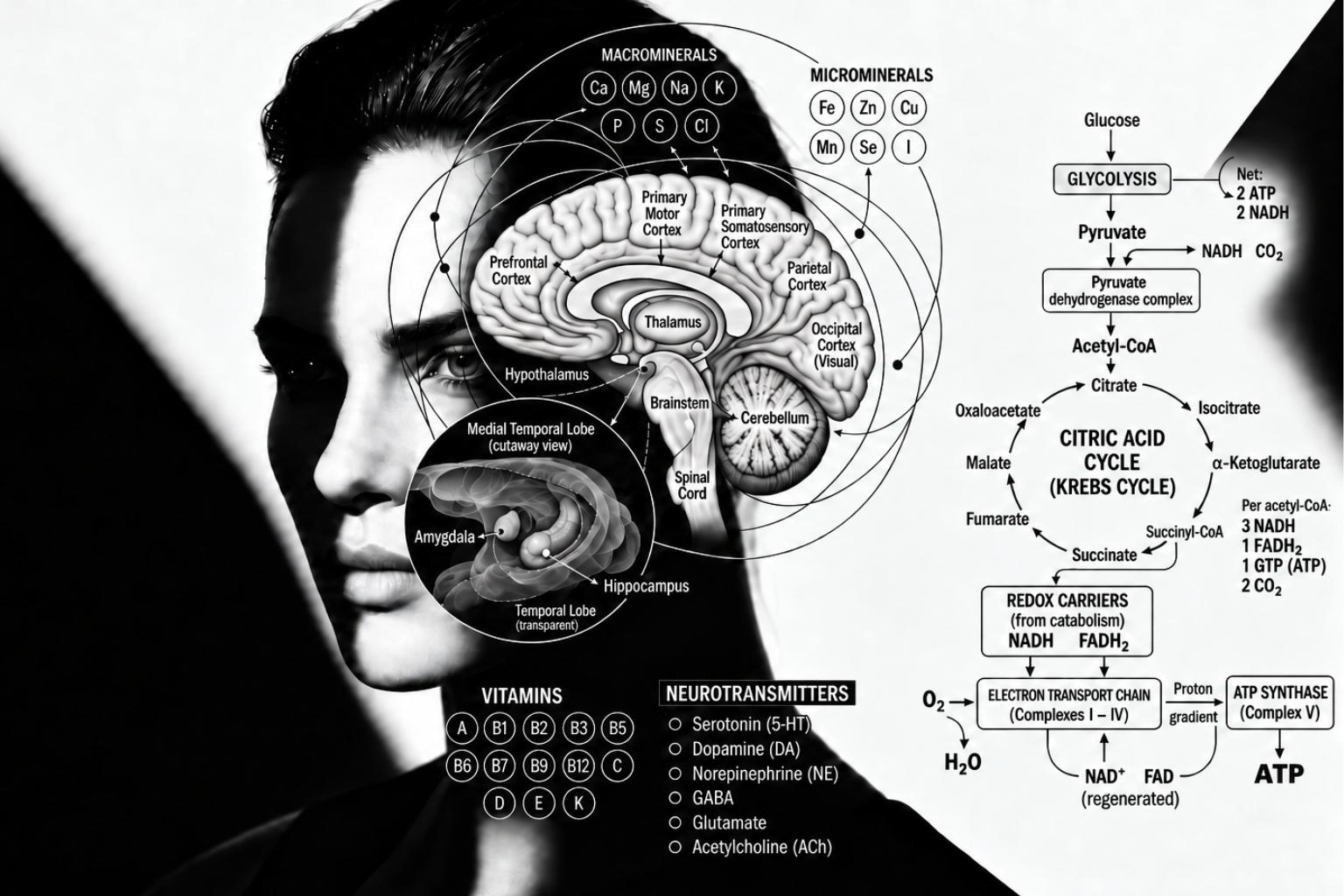

In depression, the body is not only the place where distress manifests itself, but also participates directly in the possibility of change.
In my work, it is fundamental to distinguish a primary healthy memory of the body from traumatic memories formed by the events of our existence and from transgenerational memories we inherit.
Depression can thus also be understood as an expression of these memories that need to be transformed, while bodily, biological and nutritional work can contribute to reactivating more fundamental resources, so that the organism can once again genuinely participate in the process of change.
I have explored this subject in depth through more than thirty years of studying the HTMA test – Hair Tissue Mineral Analysis – through which nutritional minerals and toxic metals in the hair are identified.
This work has formed part of my broader study of tissue metabolism.
It has enabled me to deepen my understanding of the role of the biological dimension in the processes of balance and change within the organism.
For genuine and profound transformation to occur, the organism must be able to produce sufficient energy.
Without this biological capacity, change may begin; however, it cannot be sustained over time, and lasting resolution is therefore impossible.
When applied to the reading of the body, the etymological meaning of depression as ‘bringing to a lower level’ is particularly interesting, because it can be understood not only in psychological terms, but also in bodily terms.
In the body, ‘to depress’ may evoke a reduction in tone, available energy, motor initiative, breadth of breathing, postural openness, and the capacity for expansion and response to the environment.
The body may therefore appear, in phenomenological terms, as having been ‘brought lower’: more closed, less toned, less mobile, and less propulsive.
This phenomenological framing is consistent with work in psychiatric embodiment theory (Fuchs & Schlimme, 2009).
This does not mean that depression can be reduced to posture or to a single bodily mechanism.
It does, however, mean that the term itself contains the idea of a lowering of level, which can also be observed in the way the body inhabits space.
Depression, already in its etymological root, indicates a downward movement, a reduction in level.
When applied to the reading of the body, depression may manifest as a loss of tone, energy, openness and capacity to respond.
The body is therefore not merely the place in which depression manifests itself, but participates concretely in the form it takes and in the possibility of transforming it.
The most interesting aspect is precisely this: depression is not merely a mental state, but a global lowering of the organism’s capacity to sustain movement, response and change.
Fuchs, T., & Schlimme, J. E. (2009). Embodiment and psychopathology: a phenomenological perspective. Current Opinion in Psychiatry, 22(6), 570–575. https://doi.org/10.1097/YCO.0b013e3283318e5c
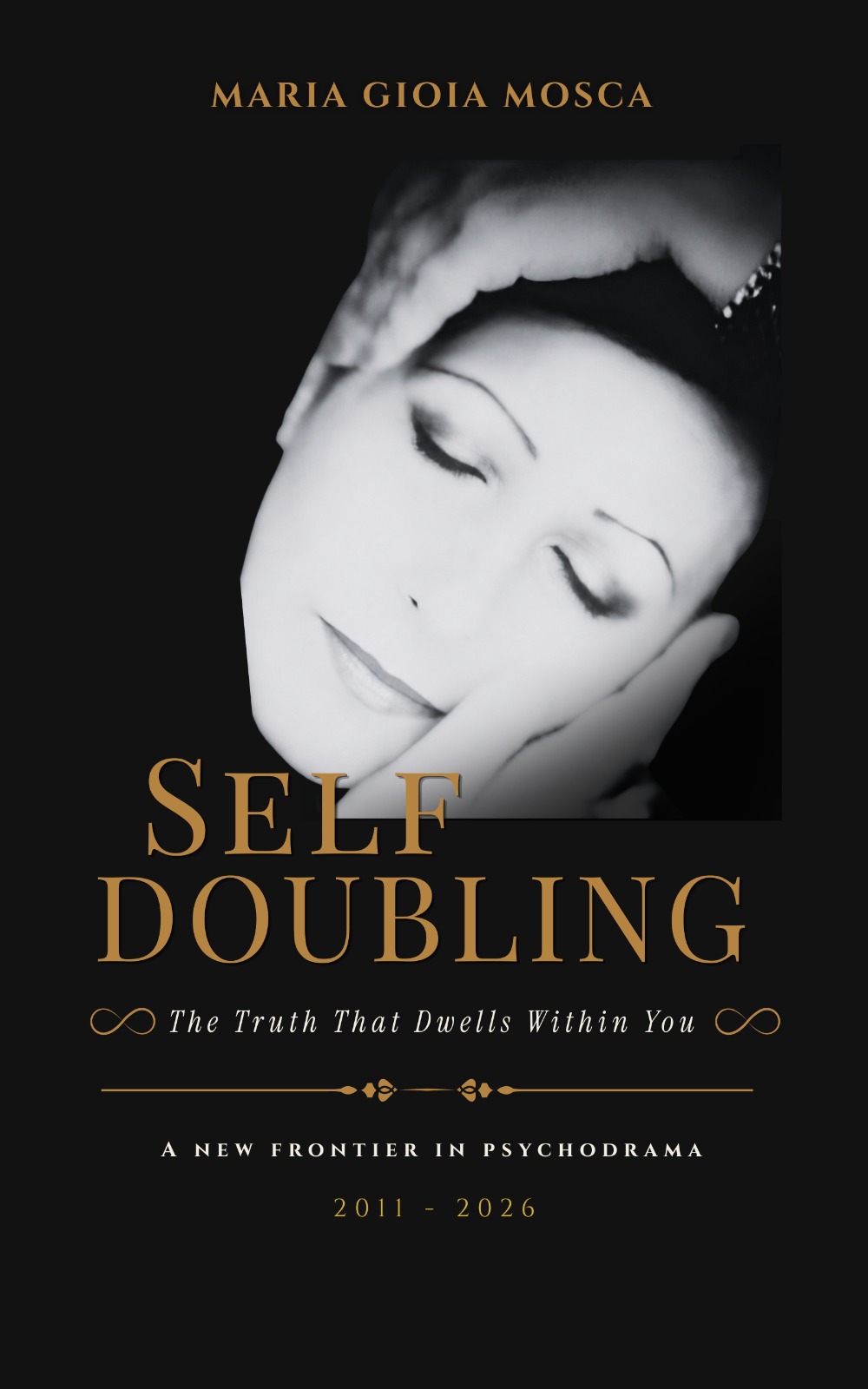
MARIA GIOIA MOSCA
Creator of Self Doubling©
Maria Gioia Mosca is a psychodramatist and independent researcher whose work focuses on psychodrama, embodied memory and transgenerational processes.
For more than thirty years, she has devoted herself to studying the human being in their spiritual dimension.
She first encountered psychodrama more than thirty years ago and developed Self Doubling© between 2011 and 2026.
Her work brings together psychodrama, psychogenealogy, transgenerational therapy, embodied and bodily memory, posturology, nutrition, and the study of the relationship between the body and emotional experience.
She is the originator of the Mosca Method.
Member of
- International Association for Group Psychotherapy and Group ProcessesIAGP
- Associazione Italiana Psicodrammatisti MorenianiA.I.Psi.M.
In Gratitude
Monica Zuretti
Master of Morenian Psychodrama
A profound human and professional presence in the world of Morenian psychodrama, whose teaching and lineage inform the ground from which this work has grown.
What the reader finds within the Table of Contents.
Turn the pages of the real index — chapter by chapter, with page numbers.
Front Matter
- Editorial Data, Copyright and Deposits of the Work2
- Note on Terms and Intellectual Property4
- Acknowledgements5
- “The fundamental and important things in life can still be done” — M.G.M.5
- The Author6
- Introductory Note to Monica Zuretti’s Preface7
- Preface by Monica Zuretti9
The Book
The Truth That Dwells Within You
225 pages · by Maria Gioia Mosca
A gift for every reader
Everyone who buys the book is invited to an exclusive online meeting with the author, Maria Gioia Mosca, who will personally answer your questions.